Announcing: Unheard Heritage
A new recording initiative, and a sneak peek at a world premiere recording out next month

So many times, I’ve sat in an archive with a music manuscript in front of me. Very few people would recognise the woman’s name on the cover. The score is usually battered, sometimes even a little mouldy. Perhaps the composer tried to hold it together with tape or glue. Often they just didn’t bother, assuming that there was little point trying to save their work as it would never be performed anyway. So the pages are in disarray, sections tucked into other manuscripts or floating loose in other boxes, and it takes a while to piece the whole score together.
The music that sings from these frayed pages, though, is exquisite. And as I play it through in my head in this hushed library where all I can hear is the muted hum of a dehumidifier, I’m filled with frustration. An unpublished manuscript is full of lost potential. It feels desperately unjust that the woman whose work I hold could have laboured so hard for their voice to be heard, to have wanted so much to say something, to be remembered, only to have their efforts stuffed onto a shelf or into a shoebox where they remain unplayed. Music lives when it is performed.
So this month I am really delighted to announce the launch of my recording initiative, Unheard Heritage, which is dedicated to bringing forgotten works out of archives and bringing them to life in world-class recordings. The purpose of the initiative is, first and foremost, to create broadcast-quality world premiere recordings with a particular focus on large-scale works by women composers. If a work can’t be heard, performers won’t play it, so we desperately need good recordings of women’s compositions if they’re going to enter the repertoire.
But if there’s one thing I’ve learned from my work promoting historical women composers, it’s that recordings are only one part of what gets a composer back on the map. A recording in isolation is useful, but it’s just a first step. For a piece to really truly get a foothold in the repertoire, you also need a good quality performance edition. You need easily available biographical information about the composer, so people know how to programme their music and approach their work. And you also need expert advocates, who can advise on performance, publication, and programming, and help to understand who this composer was and why their music matters.
Unheard Heritage is therefore a marriage of research and performance, to change the narrative about lost masterpieces. I’m collaborating with pianist and scholar Dr Samantha Ege, conductor Dr John Andrews, and Resonus Classics, and together we research unrecorded repertoire, collaborate with performers to create high quality recordings, and then work with writers to bring the composers’ stories to life. If a composition we record has not been previously published, we work to get our performance edition published so the piece will be accessible to other performers. The hope is that this work will give promoters and performers all the information they need to programme these works themselves, which will help previously neglected pieces to stay in the repertoire.
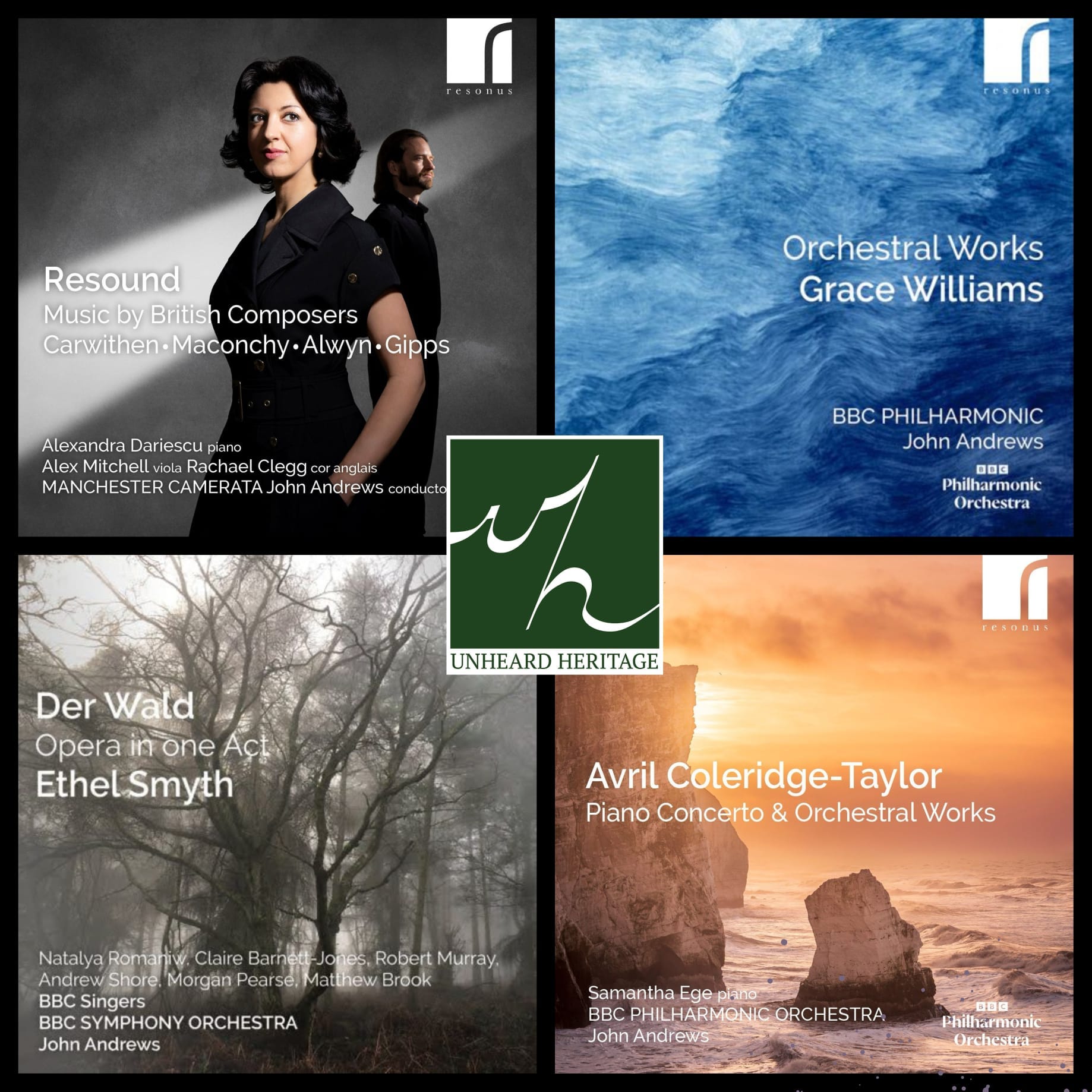
So far we’ve released the world premiere recording of Ethel Smyth’s second opera Der Wald, orchestral works by Grace Williams, and the first ever orchestral album dedicated to the works of Avril Coleridge-Taylor. And I’m thrilled to be able to say that our next recording will be released next month, with the Manchester Camerata. Titled Resound: Music by British Composers, it features the world premiere recording of Elizabeth Maconchy’s Life Story for strings. Maconchy wrote the piece in 1985 as she neared her eightieth birthday, and described it as ‘a reflection about life — my life, I suppose,’ ranging from ‘seriousness’ through ‘fantasy’ to ‘light-heartedness’ and ‘forthright decision in the finale.’ It’s an absolutely cracking piece, full of the fire and defiance and humour that makes Maconchy’s music so distinctive. I’m looking forward to sharing it with you when it releases on 4th September, so put the date in your diary please! The pre-save page for album streaming is here, or you can pre-order from Resonus Classics here.
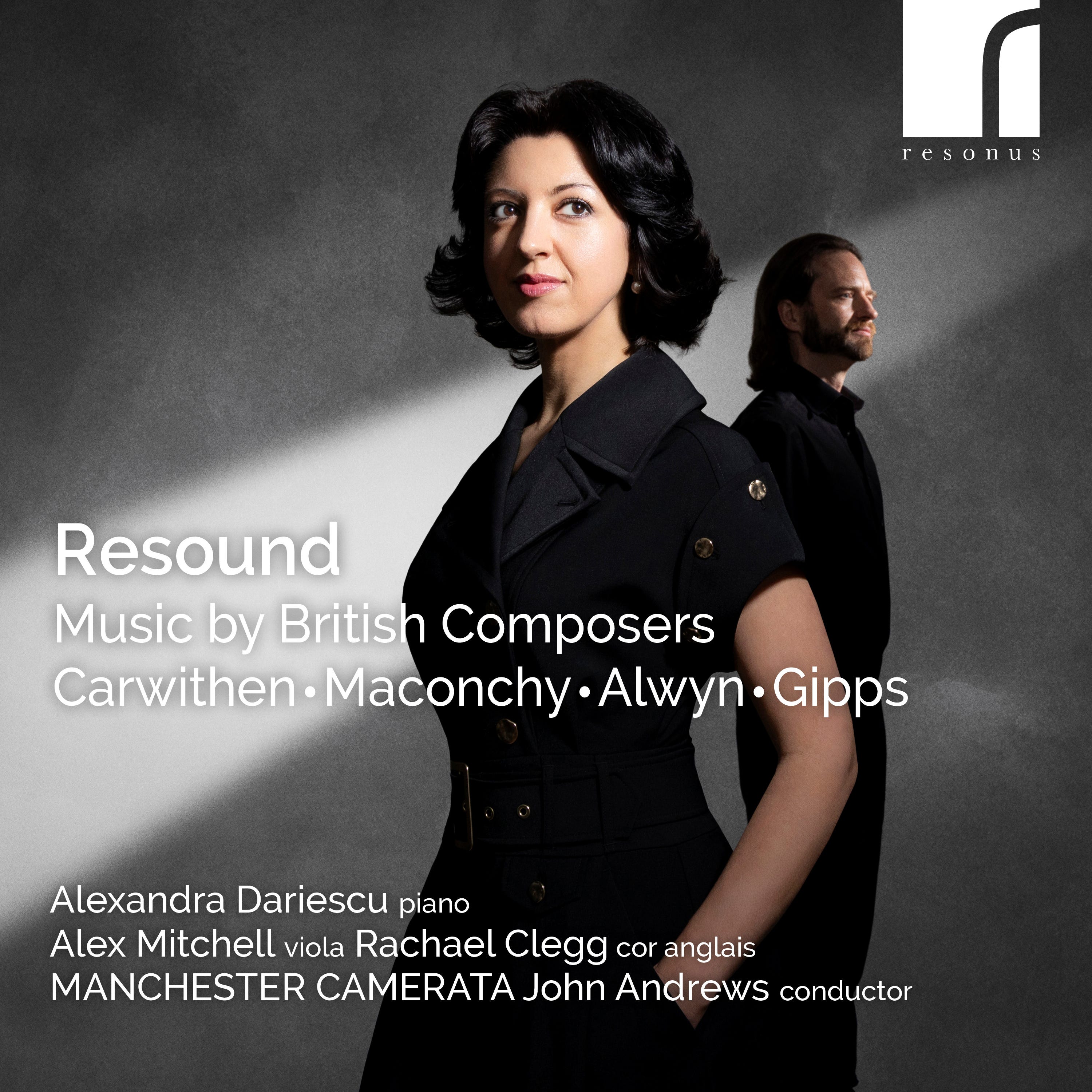
The album also features the first commercial recording of Ruth Gipps’ Jane Grey Fantasy for Viola and Strings, and new interpretations of William Alwyn’s haunting Autumn Legend and Doreen Carwithen’s vibrant Concerto for Piano and Strings. We’ve picked the third movement of the Carwithen to be released as the first album single, and you can listen to it here. The soloist for the Carwithen is Alexandra Dariescu, who is also making her Proms debut next week (!!) with Nadia Boulanger’s Fantasie Variée for Piano and Orchestra. (If you’re UK-based don’t miss this at 6pm on Wednesday 5th August, and I’ll be giving the radio interval chat about Boulanger.)
We’ve got a load of exciting recordings coming up which I can’t wait to share. I’ll be posting about the pieces and their composers over the coming months. And in the meantime, I hope that this initiative helps to move the needle, just a little bit, towards women’s music being widely accepted and loved. Because women have always been composers. No matter how difficult it was, no matter how trying the circumstances, historical women fought to make their voices heard. We only have to listen.
You can find out more about Unheard Heritage at our website. Resound: Music by British Composers is out on 4 September 2026, available to buy from Resonus Classics. Alexandra Dariescu will be giving Nadia Boulanger’s Fantasie Variée its Proms premiere on Wednesday 5 August. Seats are sold out, but Promming tickets are always available on the day. You can also listen to the Prom on BBC Radio 3, and I will be talking about Boulanger during the interval.
This was a fascinating read, thank you, and what a brilliant project. I'm really keen, as part of my own work, to promote and publish wind ensemble music by women composers and songwriters (I've already self-published 160 arrangements that have sold worldwide) and want to know if there is anyway that works, such as you have mentioned in this post, and previously, can be transcribed and enter the repertoire. There is such a wealth of professional and community wind ensembles that perform music exclusively by male composers and I want to do my part to ensure that changes and more opportunities for diverse and creative programming are explored.
This sounds absolutely wonderful. Well done, Leah, bravo. I so look forward to hearing some of this.